Open a story at your level. Hold a word for its meaning, listen and answer comprehension questions.
Meet English again in a storyReal app · sample account · Turkish interface
04
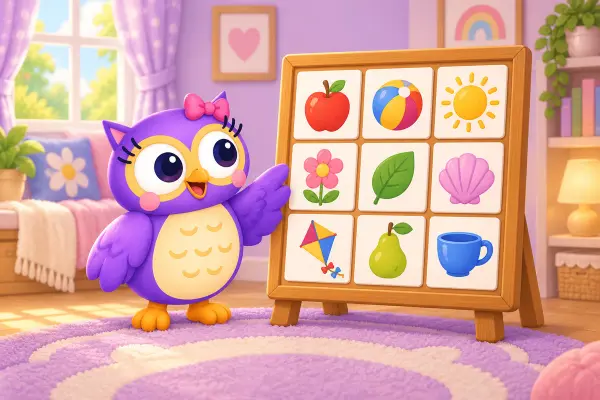
Practise through a game
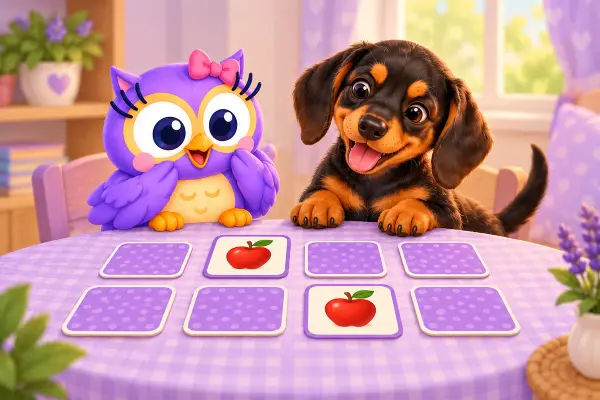
Choose vocabulary practice or a game with friends. Review your work in the report and open due lesson checks from the memory card.
Practise through a gameReal app · sample account · Turkish interface
WHAT · HOW · WHY
How is the starting level found?
Placement starts at Pre-A1 regardless of age; at least 8 correct answers out of 10 move the learner to the next level. Starting at Pre-A1 without a test is also possible.
Children find a starting point through their answers rather than a level assigned by age.
Step by step in the app
Choose Student, Parent or Teacher on Register. Students should use a nickname; complete the birth date, password and required parental consent. Teachers must enter their full name.
After registration, take placement or start from Pre-A1. Age does not assign a course level.
Placement starts at Pre-A1. At least 8 out of 10 correct answers advances you to the next course; the first course you do not pass becomes your study level.
Use Sign in to return to your account. Parents and teachers can also study and play; teacher verification is in Classes.
How is the starting level found?Real app · sample account · Turkish interface
WHAT · HOW · WHY
What happens in a grammar lesson?
150 grammar topics use short lessons: predict first, discover through examples, then practise. After a completed lesson, three-question memory checks return after 1, 3, 7, 14 and 30 days.
Explanations show the reason behind the rule; later checks provide a chance to retrieve it. At least two correct answers out of three advance the review interval.
Step by step in the app
Switch between Grammar and Sentence Structure in Lessons. Grammar topics follow a course map from Pre-A1 to C2.
Open the next lesson card or a topic on the map. Your course starts expanded; you can open other courses too. Topics are not locked.
Advance through the short lesson and tap options to answer its questions. Read explanations after mistakes and continue. Long lessons include a break and resume option.
Use Practice for topic questions and leave personal notes in the note field. Open the topic reading through Text and Questions tabs.
Track learning on topic cards. Do you remember? and Mixed review revisit topics you have studied.
What happens in a grammar lesson?Real app · sample account · Turkish interface
WHAT · HOW · WHY
How can parents follow progress and screen time?
The linked child’s report shows practice, accuracy, words and active usage time; a weekly report also arrives by email. Parents can access only their linked children’s reports.
Parents can see where practice time goes and use it to plan a study schedule.
Step by step in the app
Create a child account or link an existing account using its connection code in My children. Complete the username, password and consent fields. My children is also open automatically for people aged 18 or over who signed up as students; no separate parent account is needed.
Open progress and schedules from each child card. Weekly answers, words and usage update as they study.
Manage the child’s password and account from account actions. Linked children cannot delete their own account.
Follow the teacher’s email invitation or QR parent card and provide required parental consent.
You can study with your parent account too. Use Add teaching to my account on For teachers to add teaching while keeping My children.
How can parents follow progress and screen time?Real app · sample account · Turkish interface
A LITTLE DISCOVERY
Try a question.
A real Pre-A1 question. Choose an option to explore the explanation.
Pre-A1 · am / is / are
I ___ a student.
am
Correct!
The speaker is saying they're a student, so the subject is “I”: am. “Is” is for someone else like he, she or it, and “are” is for you, we and they; neither goes with “I”. “Be” is the plain dictionary form; we never say “I be a student”, because with I it must change to am.
is
You can try again.
The speaker is saying they're a student, so the subject is “I”: am. “Is” is for someone else like he, she or it, and “are” is for you, we and they; neither goes with “I”. “Be” is the plain dictionary form; we never say “I be a student”, because with I it must change to am.
are
You can try again.
The speaker is saying they're a student, so the subject is “I”: am. “Is” is for someone else like he, she or it, and “are” is for you, we and they; neither goes with “I”. “Be” is the plain dictionary form; we never say “I be a student”, because with I it must change to am.
be
You can try again.
The speaker is saying they're a student, so the subject is “I”: am. “Is” is for someone else like he, she or it, and “are” is for you, we and they; neither goes with “I”. “Be” is the plain dictionary form; we never say “I be a student”, because with I it must change to am.
FOUR FRIENDS, ONE ADVENTURE
Meet your companions
Hoot
Your purple owl teacher, guiding your learning.
Güneş
A companion for stories and discoveries.
Alparslan
By your side in lessons and games.
Dobi
The curious puppy who joins the games.
INSIDE THE APP
Take a closer look.
These are real app screens, showing the Turkish interface and sample accounts without personal data.
Step-by-step lessonThe start of a real lesson.
Practice through playA solo vocabulary game.
NEXT STEP
Ready for a first discovery.
Take a look together. Start wherever curiosity leads.